




-
The Association Employees Union (AEU) wholeheartedly condemns the ongoing ICE raids and calls for the agency's abolition. AEU condemns the Trump administration’s broader campaign of state violence that flagrantly violates constitutional protections and democratic checks and balances.
Read More...AEU General Membership Meeting July 12, 2025 Upcoming General Membership Meeting in Long Beach. View the Agenda HERE.
Read More...Association Employees Union GENERAL MEETING NOTICE The Hyatt Place Sacramento International Airport 4850 Duckhorn Drive, Sacramento, CA 95834 Saturday May 3, 2025 10:30 A.M.
Read More...Dear AEU Members, AEU and CSEA were able to come to an agreement on a MOU for the newly created LRR/MESD classification. This agreement is attached to this notice and ratificaiton information will be coming in the near future.
Read More...
Download: Signed MOU LRR-MESD Position 2-24-25.pdf
Read More....
Read More...NOTICE OF UPCOMING AEU GENERAL MEMBERSHIP MEETING AEU is having a general membership meeting in Pismo beach at the Cliffs Hotel and Spa on Saturday January 25, 2025. Members can attend in person or via Zoom pending Hotel Wi-Fi functionality. Please see the meeting agenda HERE.
Read More...Dear AEU Members: Attached please find correspondence from CSEA regarding the creation of new and modified positions for FY 2024-2025. Upon receipt of this document, AEU sent CSEA a demand to bargain along with a request for information. CSEA responded to AEU's request for information, and all of the documents are incorporated.
Read More...Dear AEU Members, AEU conducted successor bargaining surveys. Attached to this email are the survey responses. The Bargaining Committee will meet to craft the initial proposal based on these survey responses. The initial proposal will be presented to the membership in January 2025 at the initial proposal meeting.
Read More...
Download: 2025 Successor Agreement Survey Responses.pdf
Dear AEU Members: Attached please find correspondence from CSEA regarding the implementation of Timely. This implementation affects Field Staff who currently submit Activity Reports. CSEA intends to replace the current Activity Report with Timely. AEU sent CSEA the attached demand to bargain and request for information.
Read More...Association Employees Union GENERAL MEETING NOTICE The Hilton San Diego Airport Harbor Island 1960 Harbor Island Drive, San Diego, California, 92101 Saturday November 16, 2024 10:30 A.M. AEU is inviting you to a scheduled Zoom meeting.
Read More...Dear AEU Members, In accordance with the AEU Constitution and Bylaws, nominations are now open for the office of: Vice-President South, Chief Steward North, Secretary, Trustee North and Chief Steward HQ. All nominations must be made by a member in good standing, other than the nominee, in the designated jurisdiction.
Read More...
Download: October 2024 Nomination Form and Memo.docx.pdf
Dear AEU Members, In accordance with the AEU Constitution and Bylaws, nominations are now open for the offices of: Chief Steward North and Chief Steward South. All nominations must be made by a member in good standing, other than the nominee, in the designated jurisdiction.
Read More...
Download: May 2024 Nomination Form and Memo.docx.pdf
Read More...AEU Know Your Rights will begin in person at HQ at 5:30PM in 1017/1018 The Zoom Component will need to be rescheduled due to technical difficulties.
Read More...
Download: AEU KYR Flyer.pdf
Dear AEU Members, In accordance with the AEU Constitution and Bylaws, nominations are now open for the offices of: AEU Trustee South and Chief Steward North. All nominations must be made by a member in good standing, other than the nominee, in the designated jurisdiction.
Read More...
Download: April%202024%20Nomination%20Form%20and%20Memo.pdf.pdf
Good Evening, Today the election committee met to count votes in the election for AEU Vice President South, Bargaining Committee Member At Large North and Bargaining Committee At Large Support Services.
Read More...Hello AEU Members, Today ballots were mailed out for the office of AEU Bargaining Committee At Large-Support Services, AEU Bargaining Committee At Large-North, and Vice President South.
Read More...
Read More...Good afternoon AEU Members, This email serves to notify you that nominations are now open for the offices of: Bargaining Committee Member At Large-North, Bargaining Committee Member at Large-South, Bargaining Committee Member at Large-Support Services, and Vice President-South. Nominations close at midnight on February 10, 2024.
Read More...
Download: January 2024 Nomination Form and Memo #2.docx.pdf
Hello AEU Members, This email serves to notify you that nominations opened for the offices of Vice President South, Bargaining Committee At Large - North, Bargaining Committee At Large - South, Bargaining Committee At Large - Support Services today. Nominations close at midnight on February 10, 2024.
Read More...
Download: January 2024 Nomination Form and Memo #2.docx.pdf
Good evening AEU Members,
This email serves to notify you that AEU received multiple nominations from members in good standing for the office of AEU Secretary:Margie Espinoza and Maricar Nakai.Margie Espinoza withdrew her candidacy for Secretary, so Maricar Nakai has been duly elected.Please join me in congratulating Maricar and welcoming her as our new AEU Secretary!Sincerely,Denesa Moore ReinorAEU VP NorthThe following flyers are on display at the CSEA annual conference 2023.
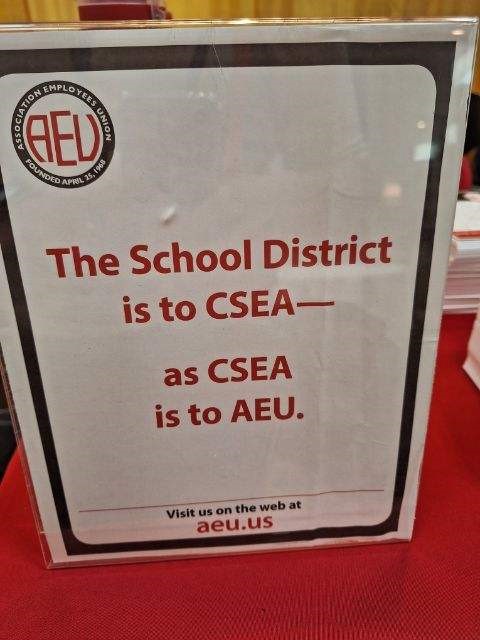
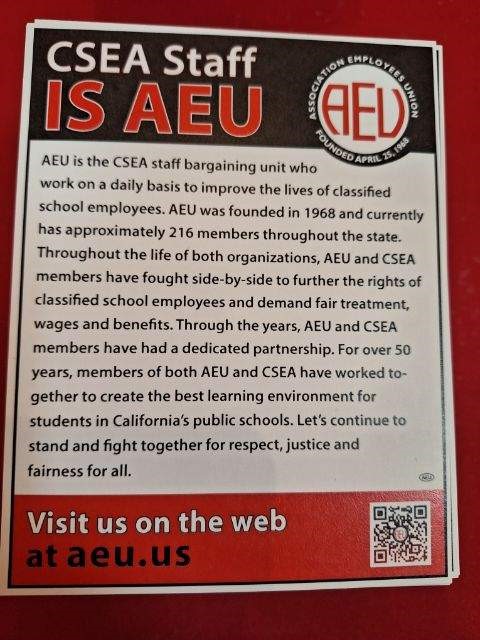
As AEU starts successor negotiations with CSEA members are showing their solidarity with the AEU Bargaining Team!
#AEUStrong!
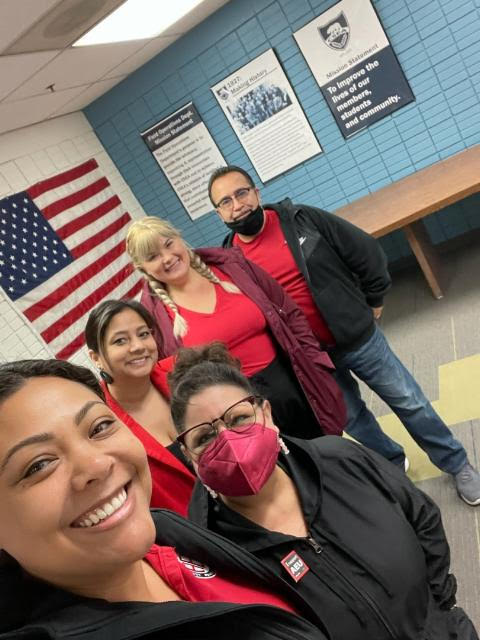
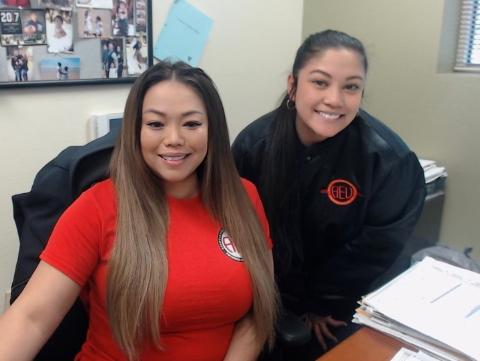

Are you showing your AEU Solidarity today? If so, send photos to be posted here! Send AEU Solidarity photos to mbreyette@gmail.com
The Election Committee completed the vote tally this afternoon. The results were as follows: For Vice President, North: Patty Atherton: 31 Denessa Moore: 21 Congratulations.
Read More...Good afternoon:AEU has received multiple nominations from members in good standing for the AEU Chief Steward North. Nominees were Jim Trujillo (SBFO) and Vanessa Cervantez (FRFO). The election committee received notice from Jim Trujillo that he wished to withdraw from the election. Vanessa Cervantez is the duly elected AEU Chief Steward North to serve the remainder of the vacated term.The election committee received no nominations for AEU Chief Steward HQ.Thank you to both nominees and congratulations to Vanessa Cervantez.Should you have any questions, please feel free to contact me.Thank you.In Solidarity,Denesa MooreAEU SecretaryAs a progressive union fighting for the advancement of working-class people of all backgrounds, Associated Employees Union (AEU) stands in solidarity with the Asian American and Pacific Islander (AAPI) community. AAPI communities across the United States have experienced discrimination, unfair treatment, and violence. We acknowledge the history.
Read More...AEU membership voted Saturday, March 20, to endorse the Protecting the Right to Organize (PRO) Act. As part of our endorsement, we voted to take action to help the PRO Act pass, strengthening our rights at the bargaining table and making it easier for our siblings in the broader labor movement to organize and form their own unions. The PRO Act includes stiff penalties for employers who commit Unfair Labor Practices; no more ability to impose last, best, and final offers; and eliminates “right to work” laws, among other things. We have many opportunities to help the PRO Act pass right now, with phone banks organized through this Saturday.Please sign up for a shift here:Learn more about the campaign to Pass the PRO Act here:Good Afternoon: The election committee met to count votes in the election for AEU Vice President South. There were 58 valid votes cast in compliance with the AEU Constitution and Bylaws. The results are as follows: Robert DeWitz - 32 Votes Gary Snyder - 26 Votes Thank you to everyone who voted and to the candidates for running a great race.
Read More...The COVID 19 Extension has ratified. Thank you to everyone who voted. ONLINE RATIFICATION VOTING NOTICEâ—� COVID-19 Effects Agreement ExtensionOnline Voting will open: 12:01 AM on Thursday, September 17, 2020Online Voting will close: 11:59 PM on Monday, September 21, 2020Every AEU Member will receive an email from Simply Voting with a link to the online ballot and a unique Elector ID and Password that can be used one time.If you do not receive an email with your voting instructions, please contact AEU Bargaining Chair, Denesa Moore.Your AEU Bargaining Team recommends a YES vote on this agreementRATIFICATION INFORMATIONAL MEETING
â—� COVID-19 Effects Agreement Extension
Date: Saturday, September 12, 2020
Time: Immediately following the AEU General Membership Meeting
Location: Zoom
The complete text for this agreement is attached to this Ratification
Informational Meeting Notice.Your AEU Bargaining Team recommends a YES vote on
this agreement.
The Association Employees Union (AEU) on solidarity and justice for Black Lives
AEU, like many other labor unions, believes in the principle of “an injury to one is an injury to all”. This principle is likened to the well-known quote of “an injustice anywhere is a threat to justice everywhere.” This conviction inspires AEU to issue the following statement:
AEU unequivocally condemns the recent deaths of George Floyd, Breonna Taylor and many other unarmed Black men, Black women and Black children who have been killed by police officers.
>AEU unequivocally condemns police brutality, unlawful uses of excessive force and all other racially motivated inhumanities, injustices, inequities and inequalities.
AEU wholeheartedly stands in solidarity with the Black community – our members, colleagues, families and friends – who have, directly or indirectly, encountered, experienced or been impacted by racism and impunity, in part, because others do not speak up and act on their behalf.
AEU firmly commits to speaking and acting in pursuit of justice, equity and equality.
AEU zealously works each day to fight against workplace inequalities, unfairness and disrespect.AEU enthusiastically commits to fighting against racial inequalities, unfairness and disrespect.
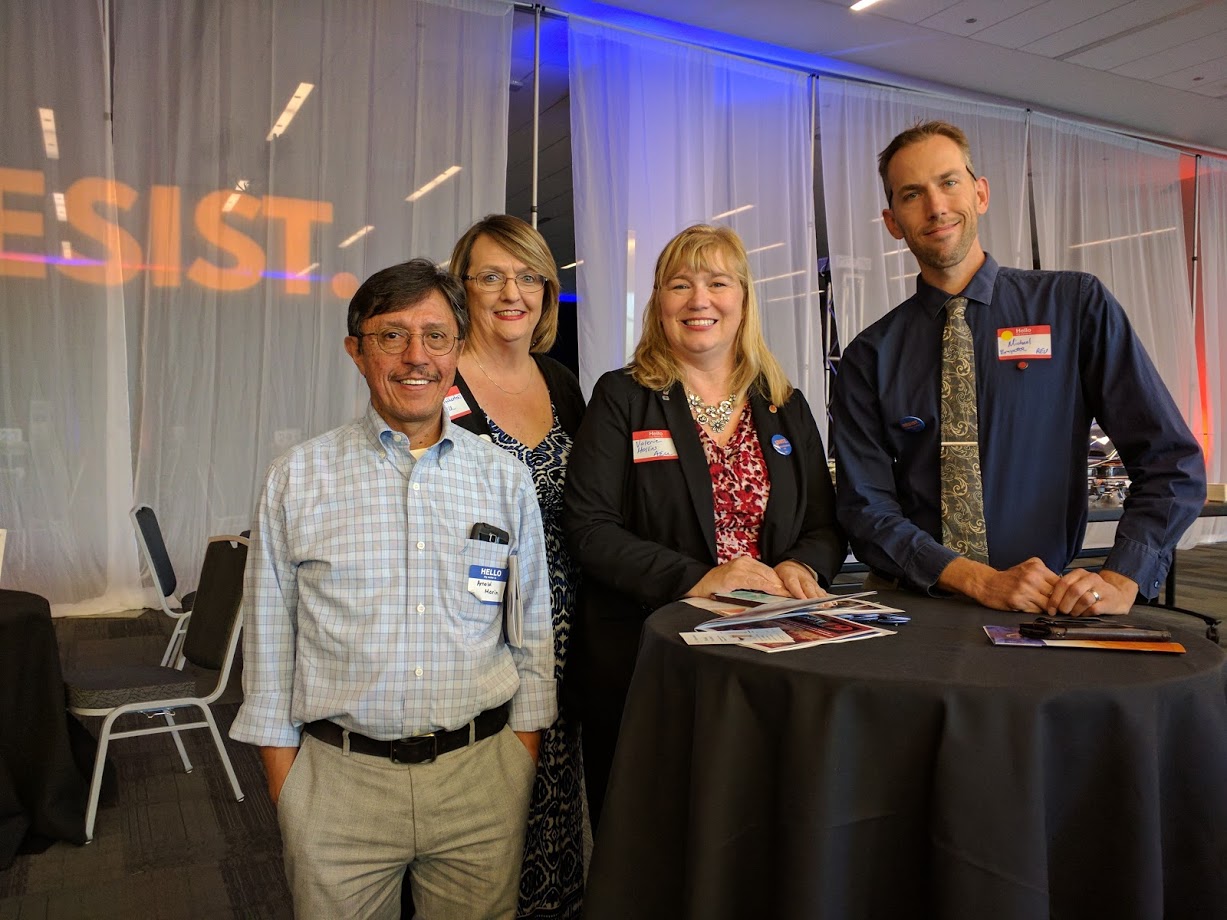
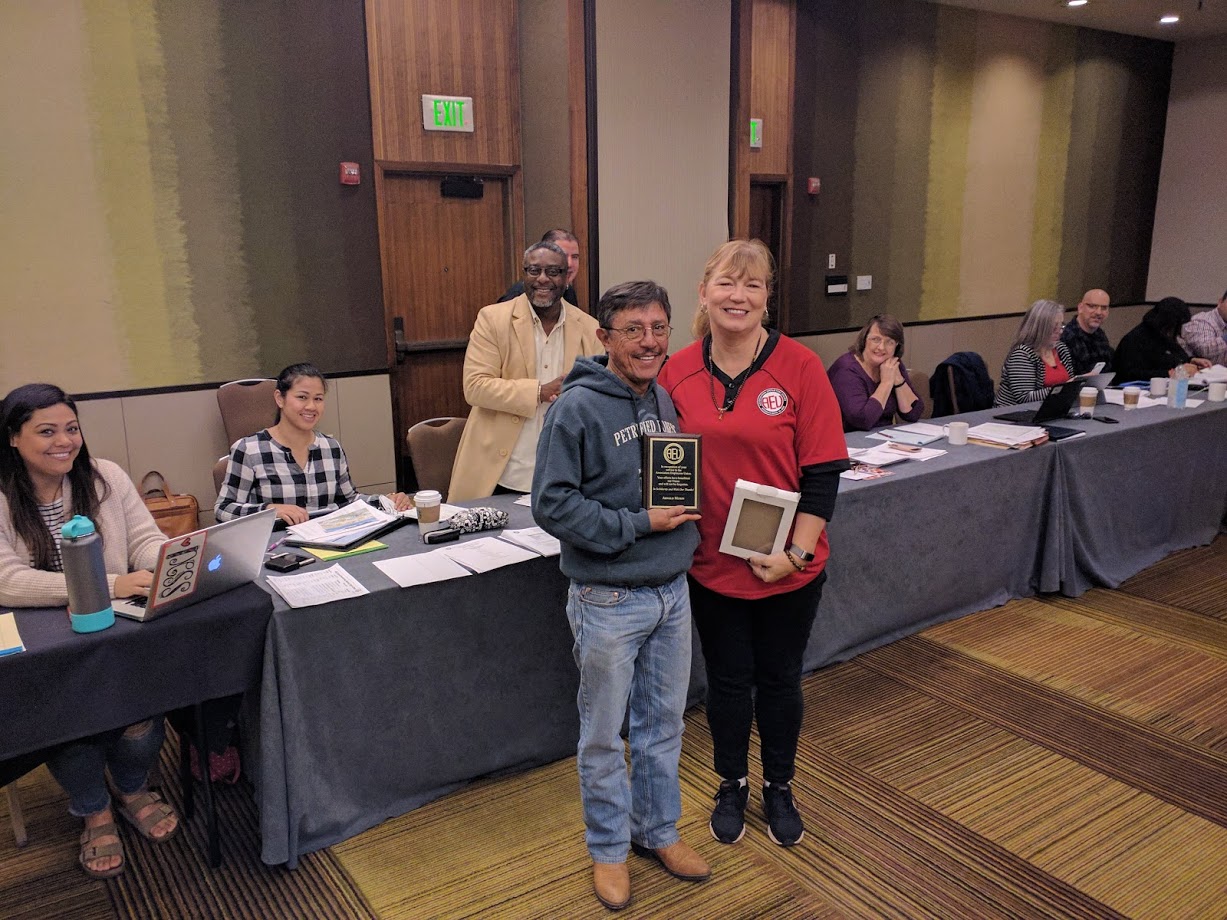
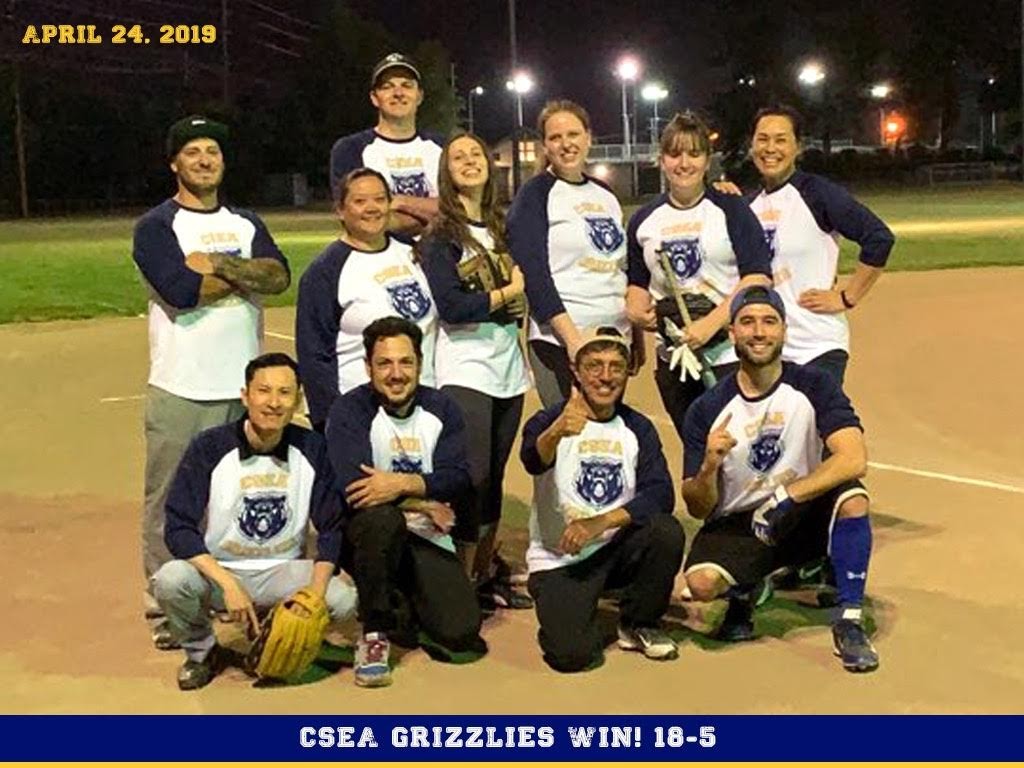
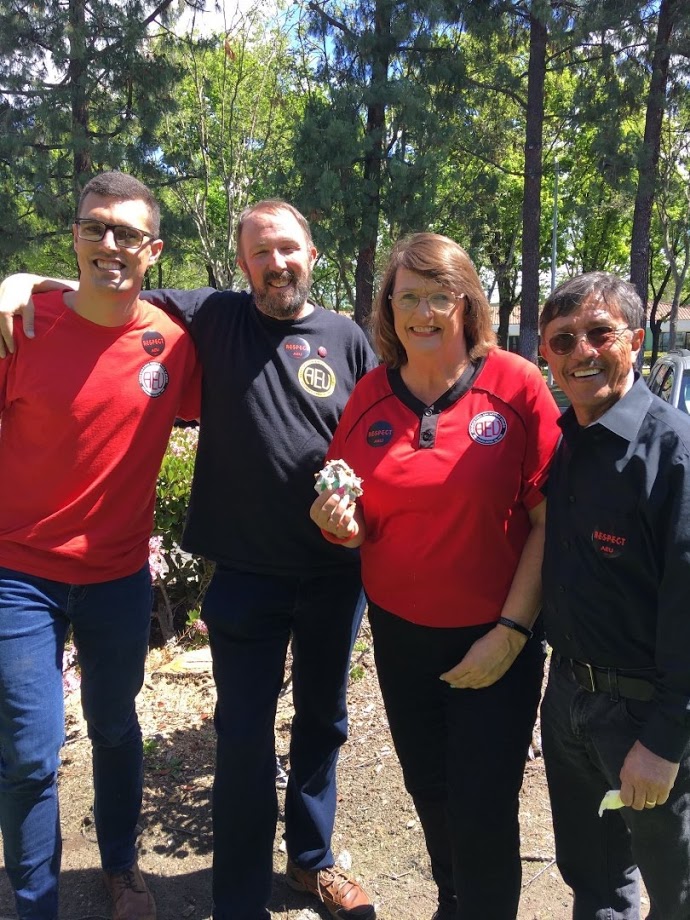
AEU wants to wish Arnold Morin, CSEA Executive Coordinator, and long time AEU Activist a very happy retirement. Arnold began his service to AEU in 2001 and his efforts have truly made AEU a better, stronger, union. Arnold will be sorely missed, but we coudn't be happier for him!



.jpg)
A few of his friends left a couple comments for him:
Valerie Hollins, AEU President:
Arnold, I'm going to miss you! We didn't interact too often workwise except for when we had Chapters in Administratorship, which I often ended up working on, as did you, but 95% of our collaboration has been AEU. I want to thank you for your service to AEU. So many times we were huddled together dealing in stressful situations, trying to represent our members and enforce that crazy document called a contract. I think we both lost years off our lives arguing with Karen, and of course I'll never forget that ghost story you told me! We had an awesome party planned for you this weekend and I have every intention of making good on that as soon as we can do so safely. Please stay in touch! Visit us at AEU meetings and let's definitely do some hockey games!!
Have a happy retirement. You have definitely earned it!
Good luck my friend! 🥂�Jim Trujillo, AEU Trustee-North:
Arnold, you made it! We will miss you, especially your sense of humor, kind heart and character. I’m thankful for being your friend. Enjoy your next journey and don’t forget to smell the roses!
David Wood:
With the retirement of our friend and brother, Arnold Morin, words fail us as we seek to express all that this man of courage and integrity, this warm, welcoming, and sincere, friend to all has been to us over the last 27 years. We have witnessed his diligence and the care he took in his work, his commitment to his AEU brothers and sisters, to fairness, and to making a better workplace, and some of us have been lucky enough to sit down with him and share ideas and discover what an amazing human being he is. We are all better for having known Arnold as a colleague, Union Brother, and friend, and we will carry all the ways he has inspired us and challenged us to be better with us every day. We are sad for us, as he transitions into retirement, but happy for him and excited to see him enjoy the retirement for which he has worked so hard and which he has defended all of these years. Arnold, as you ride off into the sunset, we send you off with love and wish you a long and happy retirement filled with all of your favorite things.
Michael Breyette, AEU Webmaster:
Arnold- First, I want to thank you for your friendship, and for always being there as a source of support and answers, as both a CSEA member, and eventually as CSEA staff. As I came on board in my employment with CSEA you were always active with AEU, always fighting for us to be better for everyone not in the room, and better to everyone who was in the room. You always search for that answer which could make everyone happy. You've always been a bright spot which is why when anyone comes to HQ there is always a stop off at your office. You'll be missed, but I couldn't be happier for you. Don't be a stranger!
PS: I read everyone elses comments when posting this. I want in on the hockey game.
Association Employees Union
RATIFICATION NOTICE
• Successor Tentative Agreement Package
• MOU: Probationary Extension for Compliance with Article 30.8.The informational meeting will take place via Zoom on:
Wednesday, May 20, 2020 at 6:00 PMThe Zoom link to pre-register is below:
https://us02web.zoom.us/meeting/register/tZYscO2vrj0pH9KbuLComz5pHyf2KEwHTYrRPlease make sure to pre-register in advance of the Zoom meeting. Once you pre-register, you will receive a subsequent email about joining the meeting.
Online voting will open: 12:00 AM on Monday, May 25, 2020.
Online voting will close: 11:59 PM on Friday, May 29, 2020.Every AEU Member will receive an email from Simply Voting with a link to the online ballot and a unique Elector ID and Password that will be able to be used one time.
If you do not receive an email with your voting instructions, please contact AEU Bargaining Chair, Denesa Moore, denesamoore@gmail.com.
The complete text for the agreements is attached to this ratification notice.
Your AEU Bargaining Team recommends a YES vote on these agreements.
Download: AEURatificationAndTAs.pdf
Please see the Day 7 Negotiations Files
Download: CSEA-LBF.pdf
,
AEU-7.pdf
Good evening AEU Brothers and Sisters, The parties met today for our sixth negotiations session for our 2020 successor agreement. We had a very candid discussion on the financial proposals and the situation we're dealing with in this time of economic uncertainty. The discussion was very productive and we reached agreements on additional articles. We will provide you with the agreements when they are fully executed.
At this point in negotiations, we are down to the last item, which is Article 13. The team has been advocating for a fair compensation increase as well as movement on bilingual and bilingual/biliterate stipends for our brothers and sisters doing this work. The employer has given us two options:
Option 1: A 3.5% one-time payment and a bilingual stipend of $100/month or a bilingual/biliterate stipend of $150/month, provided a unit member performs 8 hours of bilingual/biliterate work in that month.
Option 2: A 3.75% one time payment and no bilingual or bilingual/biliterate stipend.
Please fill out the survey which came to your email with which of the two options you prefer. Please complete this survey by no later than 8:00 AM tomorrow, May 6, 2020.We continue to work hard for you all during these negotiations. Please stand in solidarity as we move forward to the conclusion of the successor contract.In solidarity,AEU Bargaining Committee
Download: AEU-5.pdf
,
CSEA-5.pdf
,
AEU-6.pdf
,
CSEA-6.pdf
See AEU's Day 4 Proposal and CSEA's Response!
Download: AEU4.pdf
,
CSEA4.pdf
,
AEU-Comments.pdf
Good evening AEU Brothers and Sisters,
Today your bargaining team met for day 4 of our successor negotiations. We had a very fruitful negotiation session and have reached tentative agreements in eight additional articles. We will provide you with the attachment when it is fully executed.
Today was the first day that our team received economic proposals from CSEA. You can review those proposals below.
The parties will resume negotiations on Monday. We look forward to continued dialogue.
If you have any questions, please reach out to any member of the bargaining committee. Stand with us in solidarity as we move forward to negotiations on Monday.
In solidarity,
AEU Bargaining Committee
#AEUStrong
Download: AEU Response #3 to CSEA Proposal #2 04.30.20.docx
,
CSEA Response #2 to AEU Proposal #2 04.30.20.docx
,
CSEA Response #3 to AEU Proposal #3 04.30.20.docx
,
TentativeAgreement Articles.pdf
AEU Response #3 to CSEA Proposal #2 04.30.20.docx
,
CSEA Response #2 to AEU Proposal #2 04.30.20.docx
,
CSEA Response #3 to AEU Proposal #3 04.30.20.docx
,
TentativeAgreement Articles.pdf
Good afternoon AEU Brothers and Sisters, Today we were scheduled for day 3 of our 2020 Successor Negotiations. Unfortunately, one of our team members was ill and CSEA elected to cancel negotiations until the entire team could be present. We look forward to resuming our negotiations tomorrow.
Read More...Today AEU and CSEA met for day 2 of our 2020 Successor Negotiations. We had a productive negotiation session and were able to agree on several proposals put forth by both CSEA and AEU. You can view AEU’s Proposal #1 to CSEA’s Counter Proposal, CSEA’s Proposal #2, and AEU’s Proposal #2 to CSEA’s Counter Proposal attached to this email. We also received a response to the RFI which is attached here as well.
During our negotiations today, we did not receive any monetary proposals from CSEA on the items we put forth. We had a robust conversation around the budget and the parties have a better understanding of their respective financial positions and proposal costs.
We cannot underscore the importance of the uncertainty that the pandemic presents during these successor negotiations. We are facing uncharted waters and CSEA is making tough decisions and budget assumptions that absolutely impact the financial ability to achieve the transformative and life-changing contract that our members put forth in our meetings. As we face the very real possibility of layoffs among CSEA members, CSEA is contemplating a budget that will include a loss in membership, which equates to a loss in revenue. That being said, our number one goal is to protect our members from any harm.
Stand in solidarity with your bargaining team as we go into day 3 of negotiations.
Download: CSEALtrtoAEUInfoRequest.pdf
,
AEUResponse1.docx
,
CSEAResponse2.docx
,
AEUResponse2.docx
AEU and CSEA met today for our first day of successor negotiations. During AEU’s review of our initial proposal, the employer had many questions about the financial viability of our proposals. The Executive Director prefaced their proposal with his opinion of where the state of the Association is, in light of COVID-19. The Executive Director’s statement is attached below.
The path forward to a life-altering contract is unclear and the effects of the COVID-19 pandemic are still unknown, especially how it will impact our State, schools, and members' economic future.
While the employer was not prepared to discuss economic proposals today, we still had a productive day by signing a Tentative Agreement on the articles both sides agreed to not open. The signed TA is attached below. Also, CSEA did provide AEU with a counter to AEU’s initial proposal, which is attached below.
During our initial proposal meeting, the members expressed interest in adding the holiday, Indigenous Peoples’ Day (formally known as Columbus Day). During our course of negotiations, the employer was not open to giving an additional holiday but was willing to move Lincoln’s birthday from February to October to account for Indigenous Peoples’ Day. Please take a minute and complete this survey, if you support the moving of holidays from February to October to honor Indigenous Peoples’ Day.
Download: 2020-04-27 CSEA Opening Narrative.doc
,
CSEA Response AEU IP 04.27.20.docx
,
2020-04-27 Tentative Agreements Re Non-Opened Articles.pdf
2020-04-27 CSEA Opening Narrative.doc
,
CSEA Response AEU IP 04.27.20.docx
,
2020-04-27 Tentative Agreements Re Non-Opened Articles.pdf

The Association Employees Union (AEU) has always had a history of strong and progressive advocacy for the members we represent. Our membership consists of the staff members of the California School Employees Association (CSEA).
AEU brothers and sisters statewide drive the advocacy and progressive labor agenda for the biggest union for classified employees in the state of California. Unlike most other unions, CSEA has a large and diverse staff that have very specialized training in the specific fields they have chosen as careers.
AEU is proud of the fact that CSEA is not a “churn and burn” employer that takes advantage of its labor staff as many other unions do. We want to ensure that is never the case and that staff chooses to stay at CSEA because they are a good employer.
We are grateful to remain employed during this global-wide pandemic. We have the opportunity to continue to provide the stellar service we give to the CSEA membership every day, and not have to worry about our families and ourselves in these unprecedented times.
Unfortunately, our 3-year contract is set to expire on May 31st. It was unforeseen that we would be hit with COVID-19 and a shelter in place order during our successor negotiations period. We understand that the timing is unfortunate, but that always seems to be the case. We have had a recession during negotiations, Friedrichs during negotiations, Janus during negotiations, and now COVID-19 occurring while we are trying to negotiate a new successor agreement. AEU is looking for stability and safety for our membership and we believe these proposals provide that.
Some of our proposals may seem excessive, and it may seem like we are asking for a lot of changes, but the AEU governing documents require input from our members, and it requires the AEU Bargaining Team to consider every proposal, and have the membership vote on every proposal.
This final document attached is the product of that process. Do we expect to achieve success on every item? Of course not, but we do expect to have a good discussion and spirited exchange and bargain in good faith. Every proposal we have come with has a reason and a priority ranking for it.
Our membership is engaged heavily in the bargaining process. The goal for AEU is to have a life-changing contract, and we do understand that AEU and CSEA are symbiotic and we must work together for CSEA to remain the best classified employee union there is.
AEU members are everywhere CSEA success stories exist. We are the hard-working staff members making sure our CSEA members have the best contracts and worker protections in the advocacy business.
There is nothing wrong with asking for the items we are asking for. We would do the exact same for our CSEA members in the field. Our contract should be the gold standard. The contract everyone wants to strive to have. CSEA should be the employer everyone wants to work for. That is our goal.
CSEA like any other employer needs to pay competitive pay rates and benefits to its comparative labor market. It's important to have a bilateral goal with CSEA and AEU. Mutual agreement to maintain competitive pay and benefits leads to successful recruitment and retention of the talented staff of CSEA.
We look forward to a meaningful review of market comparisons, which lends itself to a successful CSEA organization by maintaining labor stability.
Good agreements are the product of professional dialogue, understanding, respect, and compromise. It is in that spirit that AEU approaches the negotiations with CSEA for our successor agreement.
Initial Proposals for AEU and CSEA are attached below.
Download: AEU Successor IP 4-22-2020.pdf
,
2020-04-22 CSEA Initial Proposal.pdf
Working People United.
-We Are AEU-

Unions are about a simple proposition: By joining together, working women and men gain strength in numbers so they can have a voice at work about what they care about. They negotiate a contract with their employer for things like a fair and safe workplace, better wages, a secure retirement and family-friendly policies such as paid sick leave and scheduling hours. They have a voice in how their jobs get done, creating a more stable, productive workforce that provides better services and products for everyone.
| Association Employees Union
Proudly serving union staff since 1968
|
- Home
- AEU Archives
- Safety Concerns
- Contact Us
- Member Resources